
Presented by Dr. Michal Raucher
Associate Professor of Jewish Studies, Rutgers University
In 2013, Yeshivat Maharat in New York City became the first Orthodox rabbinical school in the world to ordain women. Other Jewish denominations—Reform, Conservative, and Reconstructionist—had been ordaining women for decades, but Orthodox rabbis largely remained opposed to women becoming rabbis. Despite this opposition, Orthodox rabbi Avi Weiss and Sara Hurwitz, herself a recently ordained Orthodox woman, founded the school.
Initially, women who graduated from Yeshivat Maharat sought out jobs in Orthodox synagogues, but very few Orthodox synagogues were comfortable hiring an ordained woman to serve in a position that appeared to be rabbinic.
Within two decades of Yeshivat Maharat’s founding, however, many Orthodox communities have embraced women’s religious authority in a variety of forms. As of 2026, Yeshivat Maharat had ordained over one hundred women. Some serve as religious leaders in Orthodox synagogues, while others teach in Jewish day schools, work in Orthodox institutions, and serve as chaplains in hospitals. Orthodox communities have also come to recognize religious authority among those who are not ordained. Since the late 1990s, hundreds of women have become Yoatzot Halacha (Jewish legal guides) through a course of study that does not include ordination. Additionally, Yeshiva University’s Graduate Program in Advanced Talmudic Studies (GPATS) provides women with extensive Talmud study and trains them to be teachers and congregational scholars.
Through this session, participants will understand the nature of the Orthodox rabbinate today and appreciate all the ways that Orthodox women are expanding religious authority.
Register to receive the Zoom link to join us online. Barring technical issues, the recording of this talk will be added to the Program Archive on our website.
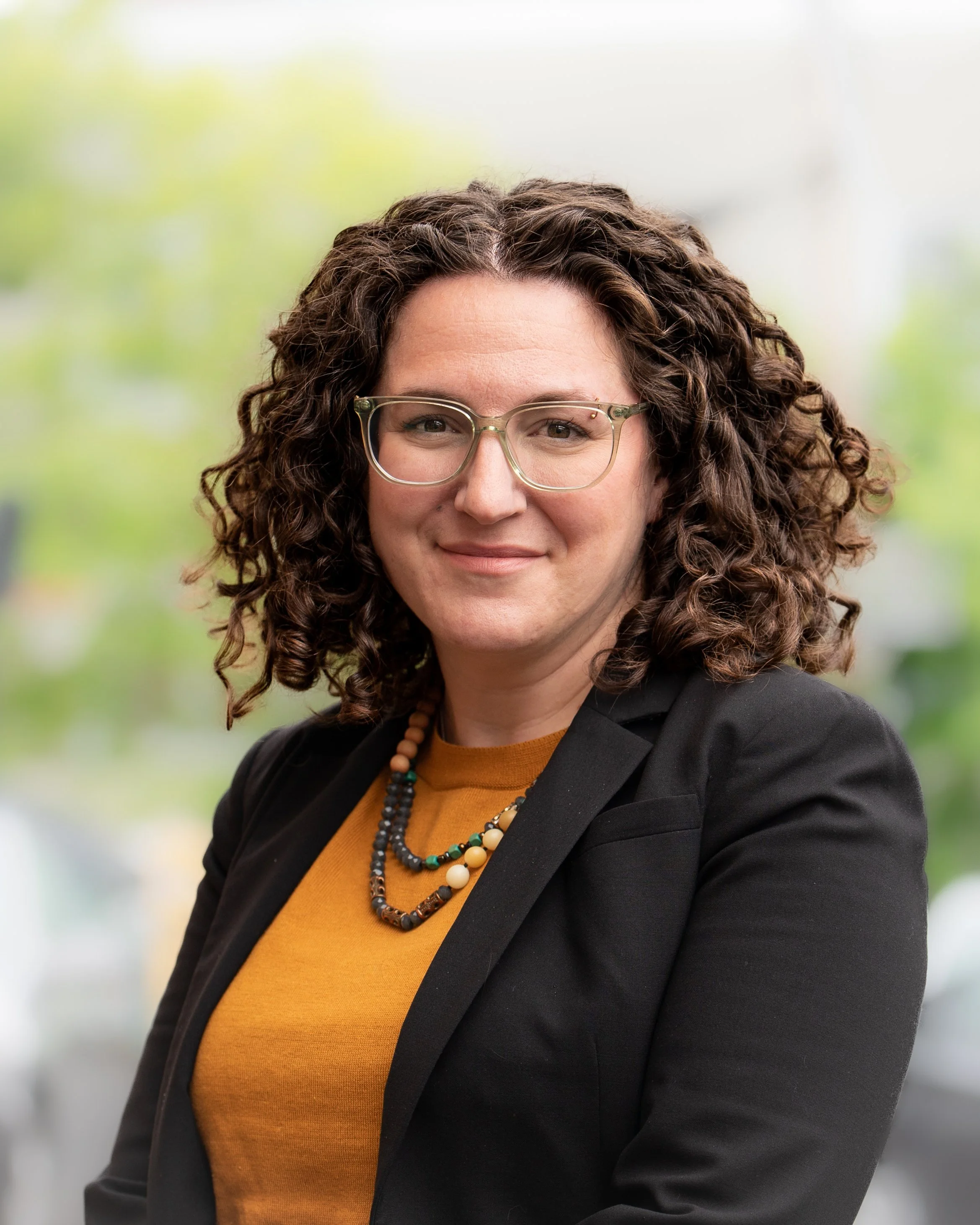
Michal Raucher is an associate professor of Jewish Studies at Rutgers University, where she teaches courses on religion and reproduction, women and gender in religion, and Israel/Palestine. Her research focuses on women in contemporary Judaism, reproductive ethics, and religious authority.
Dr. Raucher’s first book, Conceiving Agency: Reproductive Authority among Haredi Women (Indiana University Press, 2020), is based on ethnographic research on the reproductive ethics of Haredi (ultra-Orthodox) Jewish women in Israel. Dr. Raucher’s second book, titled The New Rabbis, will be published by New York University Press in the Summer of 2027. Through a focus on women rabbis, this book explores how Orthodox Jewish women are changing religious authority. Michal has also published articles and book chapters on religious support for abortion, Jewish pronatalism, the study of Orthodox Judaism, sexuality and gender in Judaism, religion and bioethics, abortion legislation in Israel, and female religious advisors on the Internet.
Since 2021, Dr. Raucher she has been interviewing Jews who had abortions in America. Her team interviewed over 100 Jews who have had abortions since 1973, and they will be publishing their findings in the coming months. Michal’s research has been supported by the Fulbright foundation, the Hadassah-Brandeis Institute, the American Academy of Religion, the Public Religion Research Institute (where she was a fellow for 2024-2026), and the Center for Reproductive Health Research in the Southeast.
Michal has been teaching public audiences for many years on issues related to Israel/Palestine, Orthodox Judaism, and reproduction and religion. She is also the co-editor of the Journal of Feminist Studies in Religion.
Dr. Raucher has degrees from Columbia University, The Jewish Theological Seminary, the University of Pennsylvania, and a PhD from Northwestern University. She taught at The Jewish Theological Seminary and the University of Cincinnati before joining the faculty at Rutgers University.
We extend a special thank you to Andrew R. Ammerman for sponsoring our 2026 program lineup. He dedicates the semester’s learning in loving memory of Josephine and H. Max Ammerman and Stephen C. Ammerman.